- Jan 15, 2026
-
If you’ve ever sat with a group of friends discussing real estate in Tamil Nadu, you’ve likely heard a horror story. Someone who bought a "beautiful mountain-view plot" only to find out years later that the land was classified as a water body, or an NRI who discovered their property had been sold twice by a fraudulent Power of Attorney.
In a sacred town like Tiruvannamalai, where land is often passed down through generations, the paperwork can get "creative." But as we head into 2026, the government has digitized most records, making it easier—yet more technical—to verify what you are buying. At Daga Developers, we believe a sale only happens once the buyer sleeps soundly.
Here is the non-negotiable legal checklist you need before signing any cheque.
1. The "Mother Deed" (Parent Documents)
In Tiruvannamalai, many lands are ancestral. You shouldn't just look at the current owner's sale deed. You need the Parent Documents tracing back at least 30 years.
- Why it matters: It ensures there are no missing links in the chain of ownership. If a great-grandfather had four heirs and only three signed the previous sale, that fourth heir could show up at your door ten years from now.
- Pro Tip: Always ask for the "unbroken chain." If a document is missing, proceed with extreme caution.
2. DTCP vs. Local Body Approval: Don’t Get Confused
This is where most buyers in Tiruvannamalai make a mistake. A "Panchayat Approved" layout is often just a sketch on a piece of paper.
- DTCP (Directorate of Town and Country Planning): This is the gold standard for plots outside Chennai. A DTCP-approved layout means the government has verified the road width (usually 30ft min), reserved space for parks, and confirmed the land is Residential (Non-Agricultural).
- The 2026 Reality: Banks in Tiruvannamalai are now lending almost exclusively for DTCP or RERA-registered plots. If it’s "Panchayat only," you are likely buying a future legal headache.
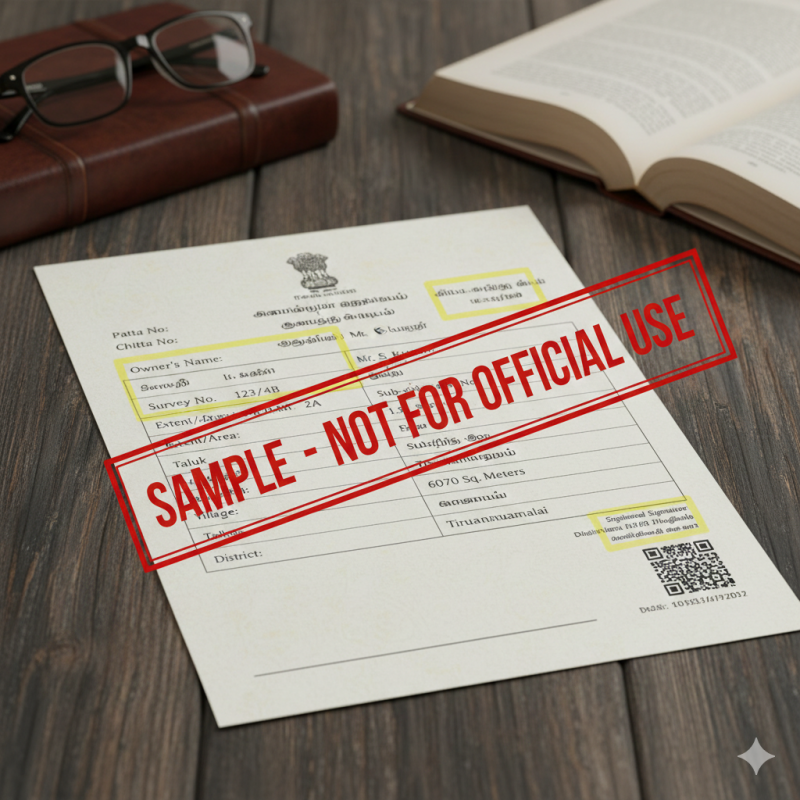
3. Patta Chitta & Adangal (The Revenue Records)
While the Sale Deed proves you bought it, the Patta proves the government recognises you as the owner.
- Patta: The record of land ownership.
- Chitta: Details of the land area and type (Nanjai/Wetland or Punjai/Dryland).
- Verify Online: In 2026, you can verify this on the TN e-Services portal. Ensure that the Survey Number and Subdivision Number on your deed match exactly with the information in the online portal.
4. The Encumbrance Certificate (EC)
The EC is the "character certificate" of the plot. It lists every transaction, mortgage, or legal claim registered against the property.
- Look for: Any existing bank lions or private mortgages.
- Timeline: Pull a "Nil Encumbrance" certificate for at least 31 years. It’s cheap, it’s digital, and it’s your biggest shield against fraud.
5. Physical Survey & FMB Sketch
Don’t just trust the stones on the ground. Request the FMB (Field Measurement Book) sketch from the Taluk office.
- The Reality Check: We often see "mountain view" plots that have encroached 5 feet into the neighbor's land or a public path. A physical survey by a licensed surveyor ensures that what you see on the map is what you get on the ground.
Special Note for NRIs: The Power of Attorney (POA)
If you are buying from abroad, your Power of Attorney must be adjudicated.
- A simple notary in Dubai or London isn't enough for the Sub-registrar in Tiruvannamalai.
- The POA must be signed at the Indian Embassy and then adjudicated at the District Registrar's office in Tamil Nadu within a specific timeframe.
Common Mistakes: The "Spiritual Land" Trap
Tiruvannamalai has many lands belonging to Temples (HR&CE) or Ashrams.
- The Mistake: Buying "Inam" land or "Temple land" thinking it can be regularized later.
- The Truth: You can almost never get a clear, marketable title for HR&CE land. If a plot is remarkably cheap and near the mountain, check if it’s "Temple Land" immediately.
FAQs – Clearing the Doubts
Q1: Can I buy agricultural land in Tiruvannamalai and build a house? Legally, no. You must first apply for a Land Use Conversion. Buying a pre-converted DTCP plot saves you months of running around government offices.
Q2: What is a "Legal Scrutiny Report" (LSR)? It’s a formal report by a lawyer who specializes in property. At Daga Developers, we provide a pre-vetted LSR for all our layouts so you don't have to start from scratch.
Q3: Is an online EC enough? The online EC is great for a quick check, but for a final transaction, always apply for a Certified Copy from the Sub-Registrar's Office.
Q4: What are the registration charges in 2026? Currently, in Tamil Nadu, the Stamp Duty is 7% and the Registration fee is 1%. Always budget an extra 8–9% of the guideline value for these costs.
Q5: How do I know if a layout is RERA registered? Visit the TNRERA official website and search for the project name or the developer’s name. Every project above 8 plots must be registered.
Conclusion: Trust, but Verify
Real estate in Tiruvannamalai is a beautiful investment—it's an asset that feeds the soul and the bank account. But the "A Tradition of Trust" that we uphold at Daga Developers is built on one thing: Transparency. Never feel pressured to "close the deal" before your lawyer is satisfied. A good developer will always hand over the document bundle with a smile and say, "Go ahead, check everything."
Thinking of buying your first plot? Let our legal team walk you through the paperwork for our current projects. We believe in "Clean Land, Clear Mind."
[Request a Document Sample for our Latest Project]

Comments :
Currently, there are no comments in this post. Be the first person to comment on this post.